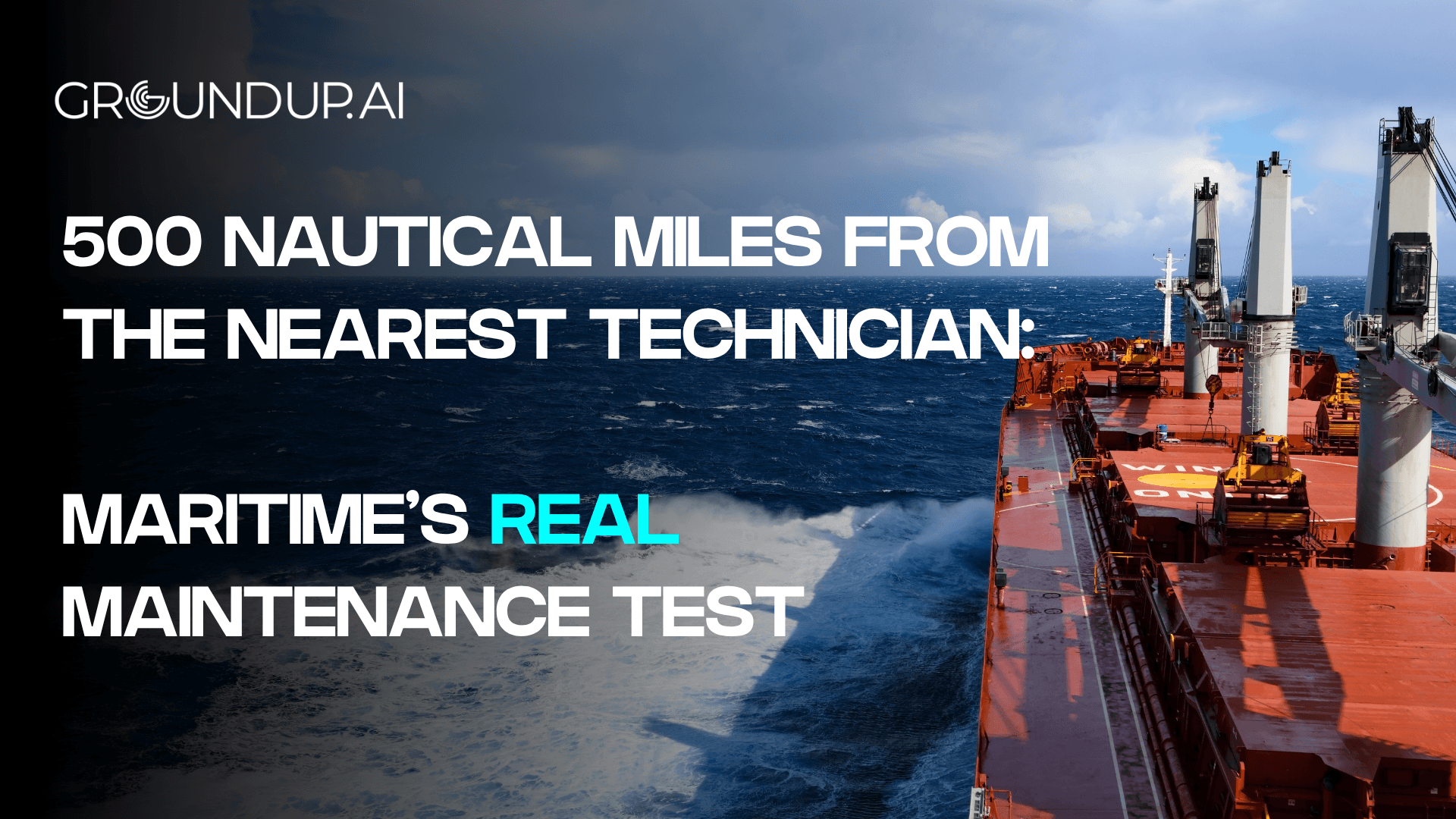
When you manage a large fleet, you cannot be on every vessel. You are trusting dozens of main engines, hundreds of auxiliaries and generators, and thousands of nautical miles of open water that the machine turning tonight will still be turning at dawn. The engine is the heart of the ship, and a main engine failure mid-voyage is the one call a fleet manager never wants: a vessel drifting, a charter at risk, and the nearest technician days away.
Machinery is where that risk concentrates. It is the single largest component of hull insurance claims, at roughly 45.5 percent of total claim costs, and a single day of unplanned downtime can run into the hundreds of thousands of dollars once you add charter loss, emergency repair, and schedule disruption. For a fleet, multiply that across every hull. This is exactly the problem AI predictive maintenance for ships is meant to solve, and exactly where most platforms make it too hard.
The Real Maritime Technology Challenge is Deployment
Around 45 percent of fleet operators now use predictive maintenance tools of some kind, and the leading APAC fleets are already on the water with them. So why is engine monitoring still patchy across most large fleets? Because traditional predictive maintenance platforms are painful to deploy at scale.
They often need invasive instrumentation, sensors wired deep into the engine during a yard period, so coverage waits for the next dry-dock. They demand heavy per-vessel integration and stable connectivity that ships at sea rarely have. And they generate so many alerts, tuned to generic thresholds, that a shore team drowns in noise and a superintendent learns to ignore the very system meant to protect the fleet. The technology is not the hard part. Rolling it across 40 hulls without taking any of them out of service is. That is the maritime technology challenge Groundup.ai was built around.
Non-Invasive Ship Engine Monitoring, Built for a Fleet
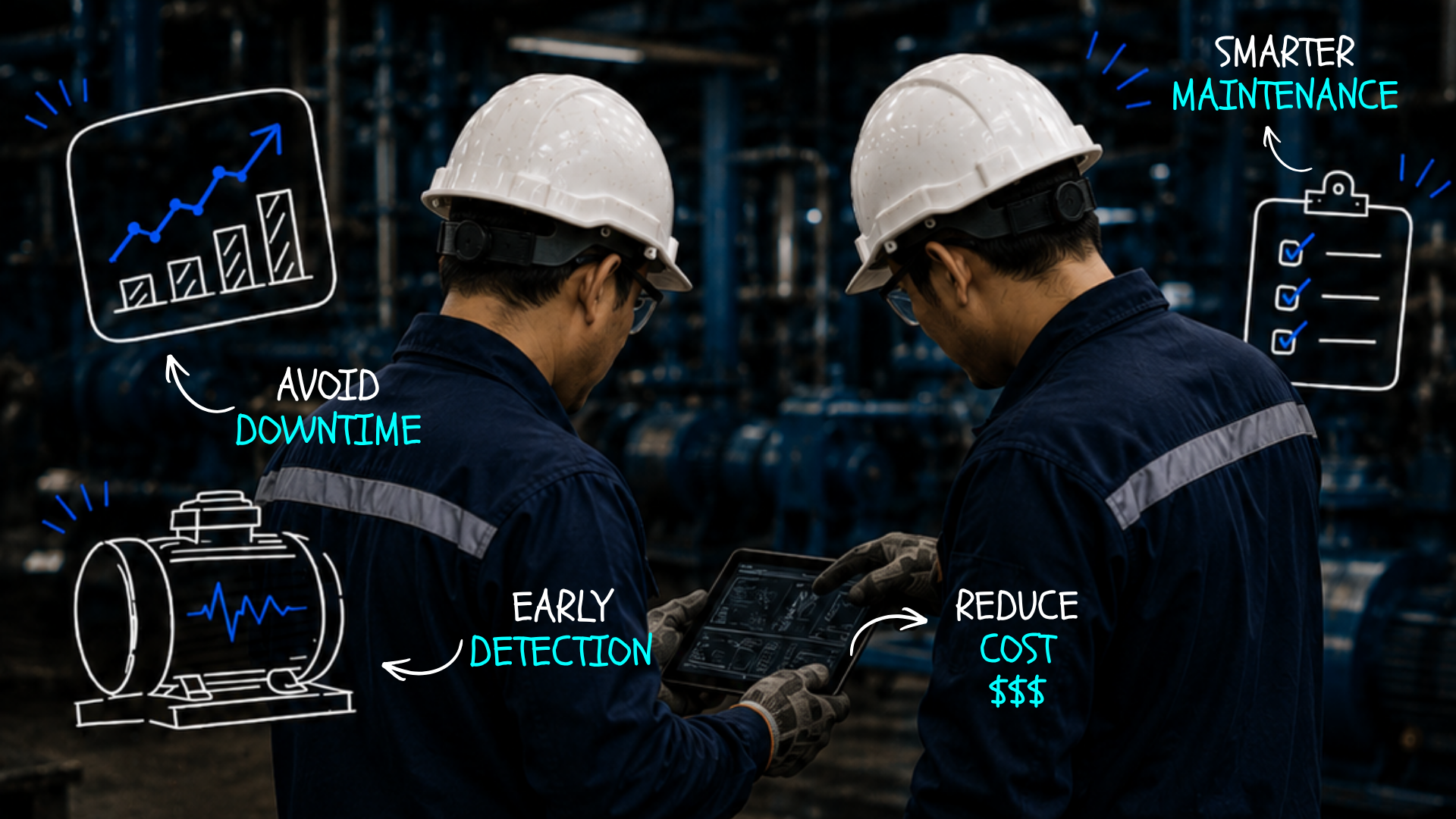
You should not have to dry-dock a vessel to start protecting its engine. Our sensors mount on main engines, auxiliaries, generators, and the compressors and pumps around them without cutting into the machinery or interrupting operations, and we draw on the data your onboard systems already produce. Coverage starts in weeks, not at the next yard period, and it scales hull by hull without pulling ships off charter.
That is what makes fleet-wide Cognitive Maintenance practical rather than aspirational. Easier deployment is not a nice-to-have in maritime. It is the difference between a pilot on one vessel and real protection across the whole fleet.
Early Failure Prediction that Reasons
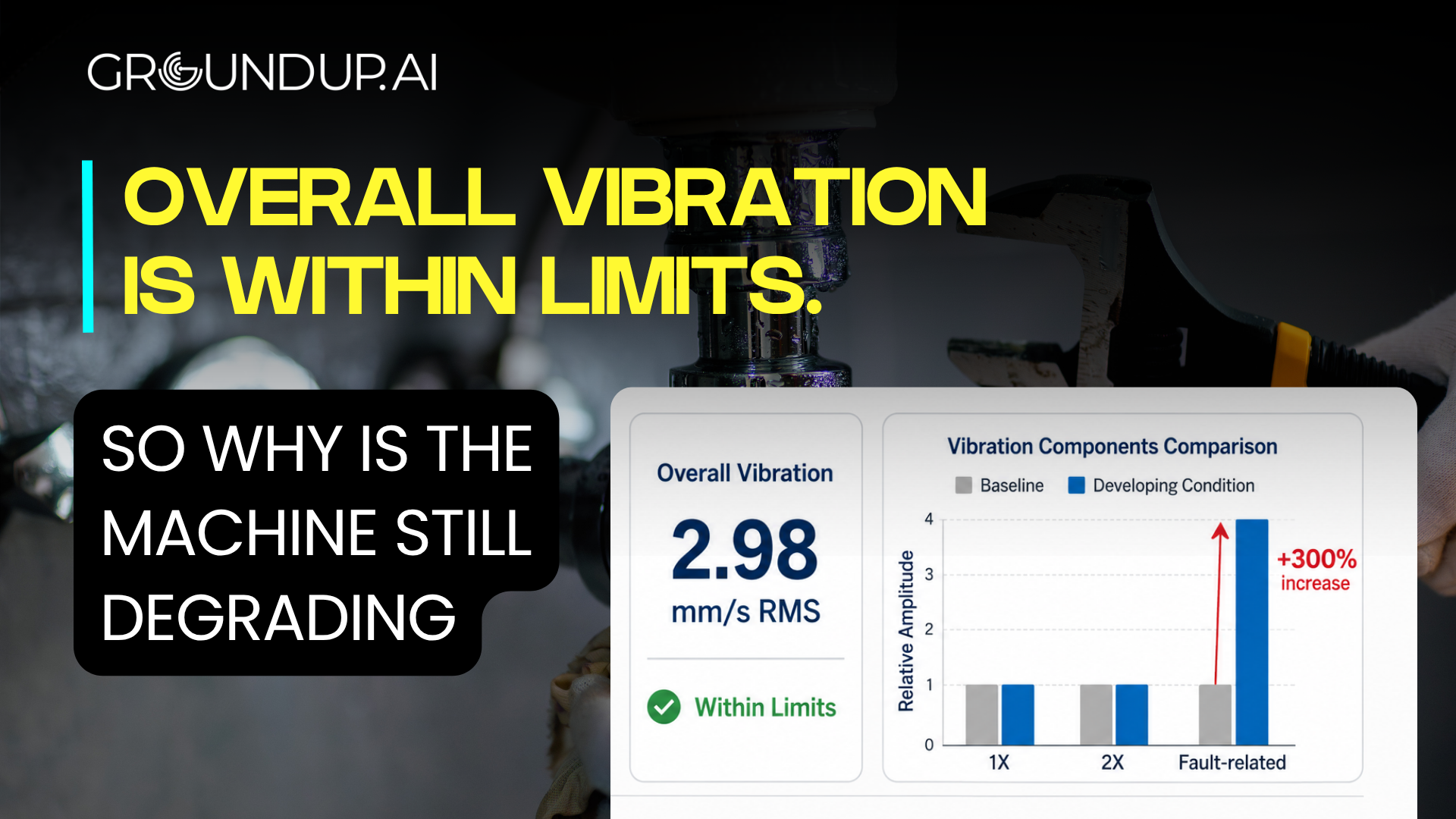
Coverage only matters if the insight is trustworthy. Every asset gets its own baseline, modelled from its own vibration, acoustic, motor-current, temperature, and process data. Because two identical engines do not share a signature once load profile, running hours, and installation diverge, we watch each one against itself, not a generic limit. That is how we cut the flood of false alarms that erodes a shore team’s trust.
When something changes, we do not just raise a flag. We isolate the failure mode and likely root cause, and estimate remaining useful life against the P-F interval, the window between a detectable warning and functional failure, so a repair becomes a planned job in the next port call rather than an emergency at sea. Reason, diagnose, guide, not just detect.
What that looks like on real assets:
- Main and auxiliary engines and generators. Combustion, bearing, and turbocharger issues surface early in the running signature, long before an alarm would fire, and long before a mid-voyage failure.
- V-type and reciprocating compressors. Each carries a distinct signature per throw and valve, so valve leakage and ring wear are diagnosable, not just detectable.
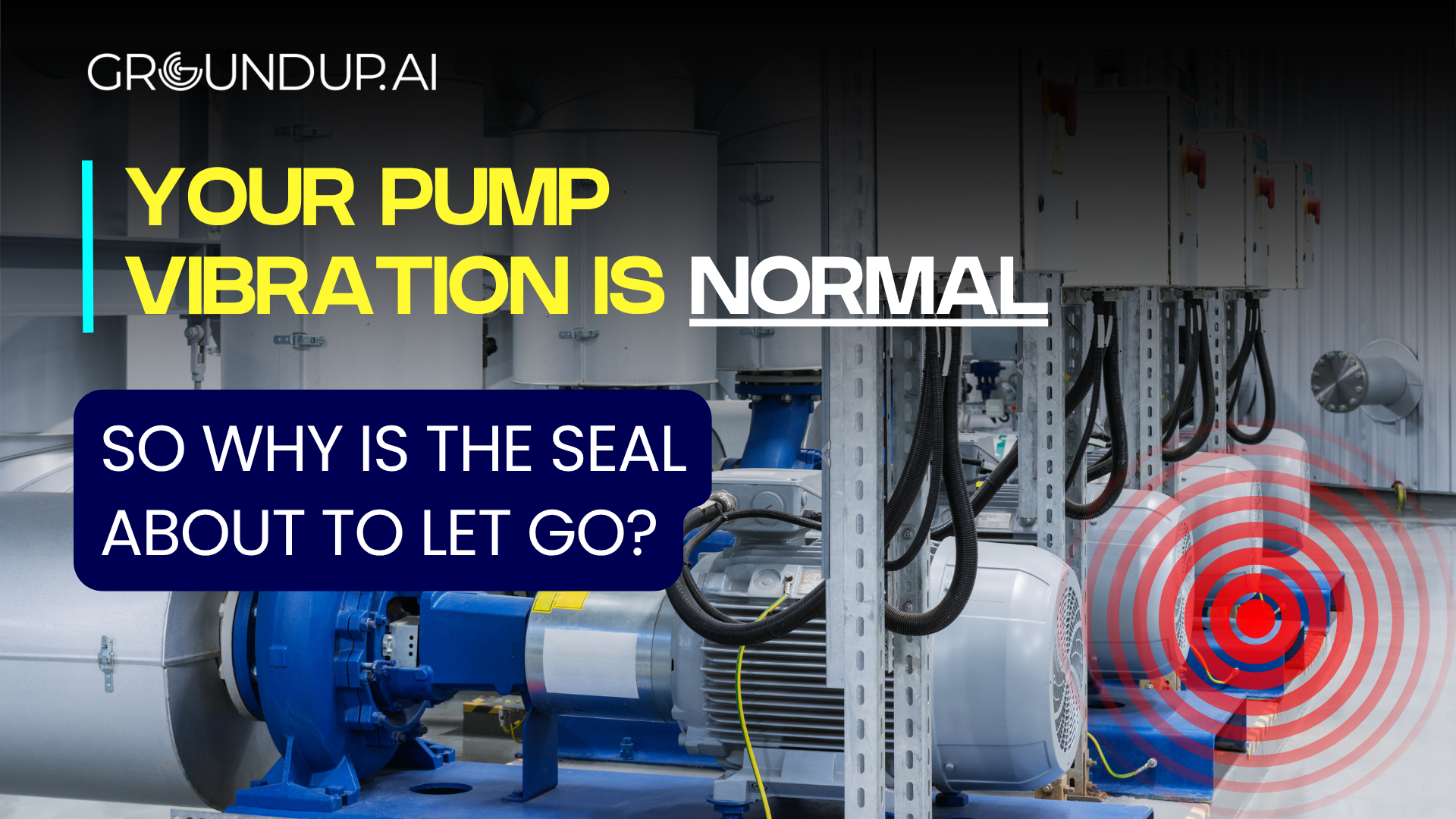
- Air starter motors, air compressors, and DG coolant pumps. Starting-air and generator cooling are classic single-points-of-failure, where a leaking valve or a failing coolant pump seal can leave you unable to start an engine or trip a generator, with blackout risk behind it.
From Vessel Insight to Fleet Decision
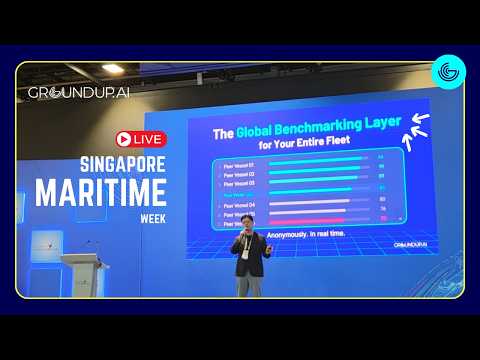
Insight on one engine is useful. Insight across the fleet changes how you run it. Groundup.ai ranks where attention is needed across every vessel, so scarce technical staff, spares, and yard time go to the assets that actually need them. That is maritime fleet management that turns a reactive, vessel-by-vessel scramble into a prioritised, evidence-led plan across the whole fleet. The world’s leading operators are already moving past predictive alerts and toward machines that reason. ⚓️
Why Fleets Choose Groundup.ai
Alongside our customers, we’ve found that the shift to Cognitive Maintenance is about trust, and trust is earned on the deck. Our Groundbreakers work alongside your crew and superintendents, proving the system on real engines, so the first time it catches something your existing tools missed, the fleet believes it. Faster deployment, fewer false alarms, and a recommended action in the hands of the person on board. That is the difference between a platform that sits in a dashboard and one that changes how the fleet is run.
If your predictive maintenance implementation has stalled because it is too invasive, too slow, or too noisy to scale, the answer is not a bigger platform. It is one your fleet can actually deploy.