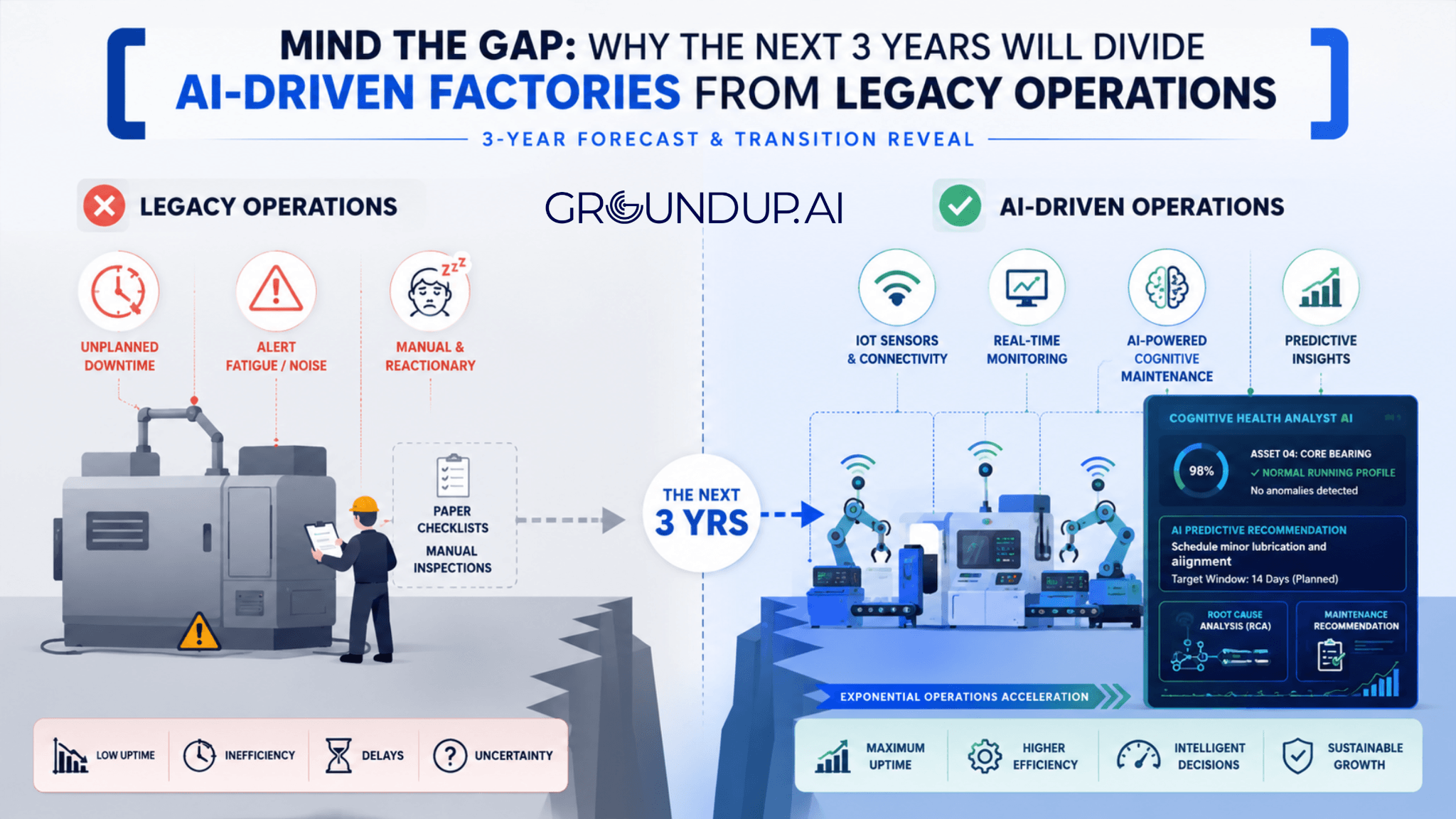
There is a metric most operations teams never track.
Not in spreadsheets. Not in board reports. Not in any ROI model built to justify a maintenance investment.
It is the human cost of reactive maintenance. And it is quietly undermining the people, and the operations, we rely on most.
What Is the Human Cost of Reactive Maintenance?
The human cost of reactive maintenance refers to the cumulative physical, psychological, and relational toll placed on maintenance technicians and engineers who operate in constant emergency response mode.
Unlike machine downtime or repair costs, this cost does not appear on a balance sheet. It accumulates invisibly, in missed sleep, disrupted family life, chronic stress, and a gradual erosion of the judgment and attention that safe, effective maintenance requires.
For organisations in Manufacturing, Maritime, and Critical Infrastructure, it is one of the most significant and least-measured risks in their operations.
What Does Reactive Maintenance Look Like From the Inside?
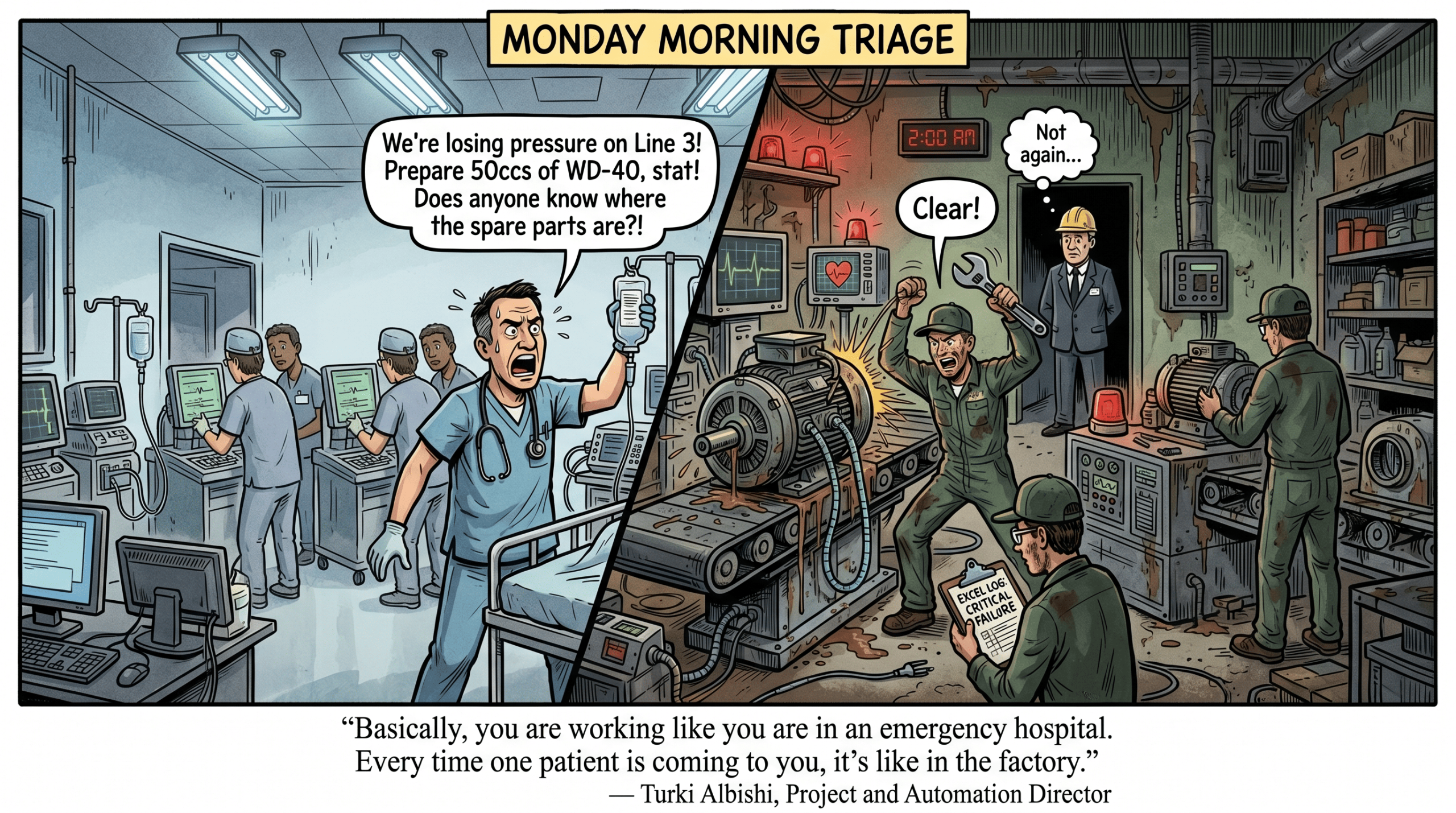
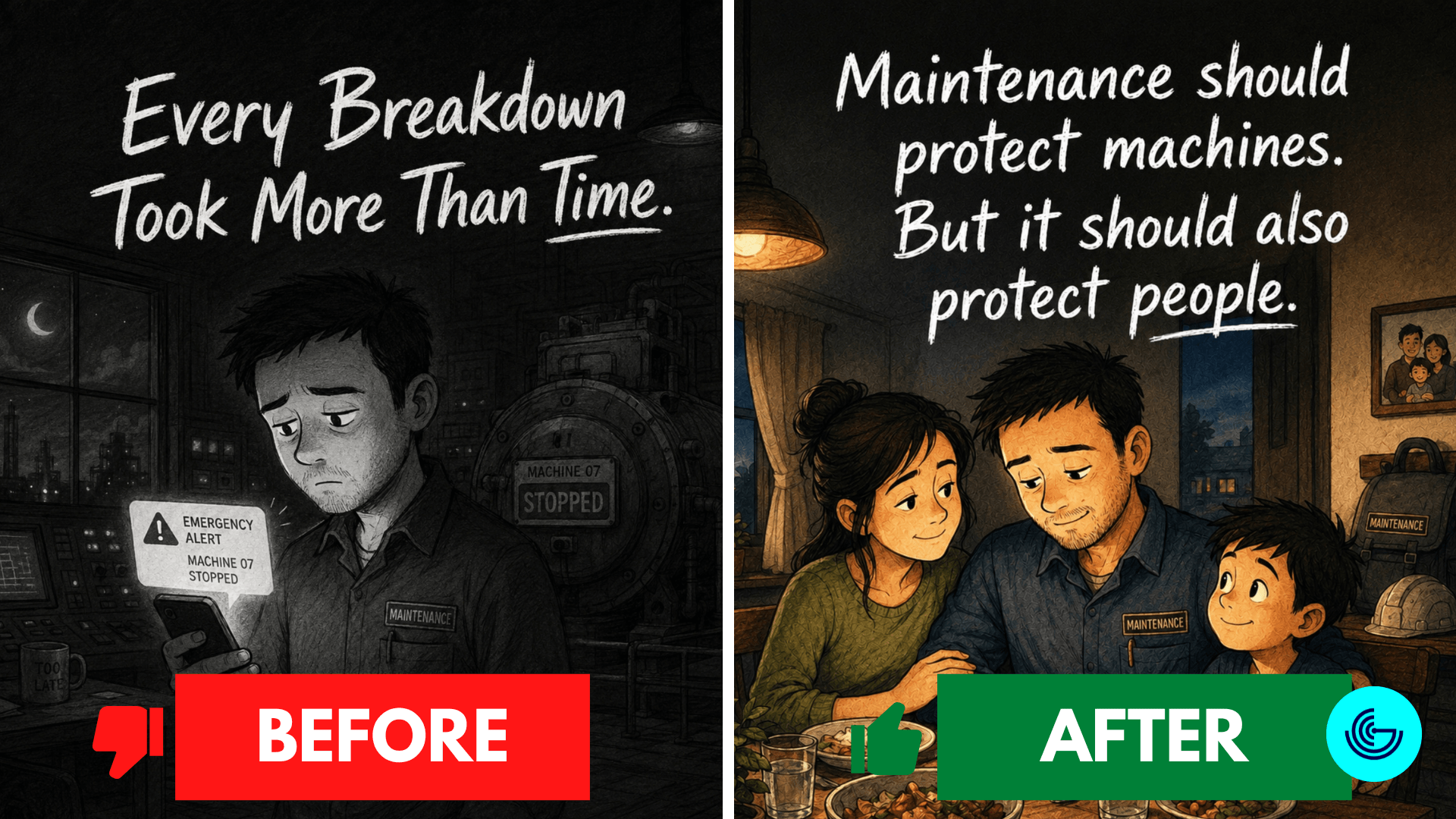
A machine goes down at 11pm. A technician receives the callout. They leave their family, drive to the facility, diagnose under pressure, fix the fault, and get back home at 4am. They are back on shift at 7.
This is not an exceptional story. For maintenance teams in reactive environments, this is Tuesday.
The emergencies do not end when the machine starts running again. Each callout adds to a growing deficit of sleep, time, and attention that never fully recovers. The unpredictability of reactive work makes it impossible to fully switch off, even on days away from the facility.
After enough time, this becomes the baseline. Teams stop expecting anything different. Leaders stop noticing because the machine is running and the uptime numbers look fine.
The numbers look fine. The people do not.
Why Maintenance Fatigue Is an Operational Risk, Not Just a Welfare Issue
Fatigue in maintenance environments is not a soft concern. It is a direct operational and safety risk.
Research on human performance in high-stakes technical environments is consistent: fatigued workers make significantly more errors. In maintenance contexts, errors lead to secondary failures. Secondary failures generate the emergency callouts that caused the fatigue in the first place.
Reactive maintenance does not just reflect a poorly designed system. It actively perpetuates one.
The cycle works like this:
Unplanned failure → emergency callout → fatigued technician → reduced diagnostic accuracy → incomplete repair or secondary fault introduced → next unplanned failure → repeat.
Breaking this cycle requires more than better scheduling. It requires removing the conditions that create emergency response in the first place, which is precisely what planned and Cognitive Maintenance is designed to do.
What Are the Signs That Reactive Maintenance Is Affecting Your Team?
Common signals include:
- High technician turnover. Maintenance roles in reactive environments are physically and psychologically demanding in ways that are difficult to sustain. Experienced technicians leave, taking institutional knowledge with them.
- Increased error rates on routine tasks. Fatigue degrades attention on low-complexity work as much as high-complexity work. Missed torque settings, skipped inspection steps, and documentation errors increase under chronic fatigue.
- Declining quality of fault diagnosis. Under time pressure and fatigue, technicians default to the most familiar fix rather than the most accurate one. This addresses symptoms rather than root causes and increases re-failure rates.
- Reduced voluntary reporting of near-misses. In high-pressure reactive environments, teams under-report incidents and near-misses because reporting takes time and may invite scrutiny. This degrades the organisation’s ability to learn from early warning signals.
If any of these are visible in your operation, the reactive maintenance cycle is already costing you more than your downtime figures show.
How Does Cognitive Maintenance Reduce the Human Cost?
Cognitive Maintenance addresses the human cost of reactive maintenance by removing the conditions that create it.
Where traditional predictive maintenance reduces the frequency of unplanned failures, Cognitive Maintenance goes further: it compresses the response cycle by delivering not just an alert but a diagnosis. The fault is identified, the root cause is determined, and the recommended repair steps are provided, before the technician arrives.
This changes the nature of maintenance work in three ways that directly affect the people doing it:
- Fewer emergency callouts. When faults are identified and addressed during planned windows, the 2am callouts that disrupt sleep and family life are reduced materially. This is not a marginal improvement. For teams in heavy reactive environments, it is a structural change to how their working life operates.
- Reduced load at the point of repair. A technician arriving with a diagnosis already in hand is not starting from zero under pressure. They are executing a planned intervention with clear guidance. The quality of the work improves. The risk of secondary errors decreases.
- Restored ability to plan. Reactive environments strip maintenance professionals of the ability to anticipate, prepare, and work with intention. Cognitive Maintenance gives that back. Teams can schedule, train, rest, and operate with the forward visibility that reactive environments make impossible.
Is Moving to Cognitive Maintenance a Human-Centric Decision or an Operational One?
It is both. And framing it as only one is why so many organisations underestimate the full return.
Most cases for Cognitive Maintenance are built on operational ROI: downtime costs reduced, maintenance spend optimised, asset lifespan extended. These are legitimate and important considerations.
But the decision is also a statement about what kind of organisation you are building. Whether the people carrying your operation are worth protecting, not just the assets they maintain.
The return on that decision shows up in places the standard ROI model does not measure: in retention rates, in safety records, in the quality of work done by people who are rested and operating with care. In maintenance professionals who go home and are actually present when they get there.
We built smarter machines. It is time we built and use smarter systems for the people running them.
Frequently Asked Questions: The Human Cost of Reactive Maintenance
Does reactive maintenance really affect technician health and safety? Yes. The National Safety Council reports that 13% of all workplace injuries are fatigue-related. A study of 312 maintenance professionals found over 52% in a fatigued state, with night shifts and irregular hours directly increasing human error rates. In environments where errors trigger equipment failures, this is an operational risk, not a welfare footnote.
How do you measure the human cost of reactive maintenance? Four indicators: callout frequency per technician per month, reactive-to-planned maintenance ratio, voluntary turnover among technical staff, and near-miss reporting rates. The NSC’s National Employer Survey identifies shift scheduling and involuntary callouts as the primary fatigue risk factors most organisations never formally track.
Can Cognitive Maintenance eliminate emergency callouts entirely? No. But organisations deploying it consistently report 20 to 40 percent reductions in unplanned callouts. That matters because, per ACOEM research, incident risk compounds with successive night shifts, meaning even a moderate reduction has an outsized effect on team safety over time.
What is the link between maintenance fatigue and asset reliability? It’s direct. OSHA research shows fatigued workers make decisions equivalent to a 0.05% blood alcohol level. In practice: symptoms get fixed instead of root causes, documentation gets skipped, adjacent equipment gets missed. Each increases re-failure rates. Fatigue and asset reliability are not separate problems.
Where should an organisation start if reactive maintenance is entrenched? Two parallel tracks. First, separate unplanned from planned downtime and calculate the true loaded cost per hour. Second, track callout frequency and technician turnover. NIOSH flags that aviation maintenance technicians, seafarers, and utilities workers are among the highest-risk groups, yet most organisations have no baseline data on fatigue incidence at all. You cannot fix what you are not measuring.