Most water utilities do not have a data problem. They have a decision problem. The SCADA historian is full, the alarms are firing, and yet the pump that fails at 2am is usually the one nobody had time to look at. Choosing the right AI predictive maintenance software is really about closing the gap between what your assets are telling you and what your team can act on.
If you are a water utility maintenance or operations leader weighing your options, here are seven things worth knowing before you sign anything.
1. Sensor deployment should be non-invasive
You cannot take a high-lift pump or a wastewater lift station offline for a week to instrument it. The best AI predictive maintenance software rides on non-invasive sensors that mount without cutting into the asset or interrupting supply, and where possible, taps the data your SCADA and drives already produce. If a vendor’s rollout plan starts with shutdowns, that is a cost and a risk before you have seen a single insight.
2. Fixed thresholds do not understand your assets
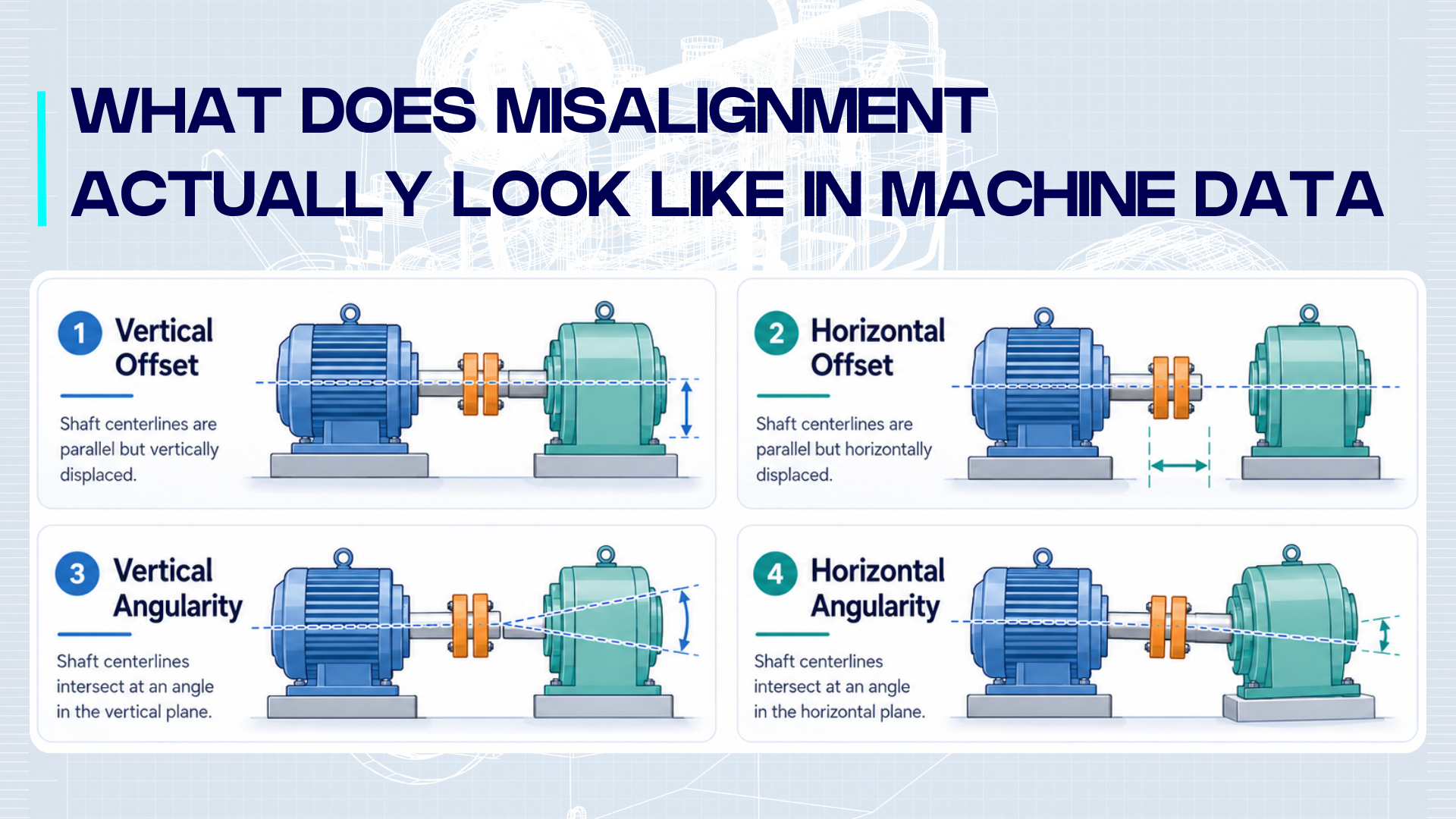
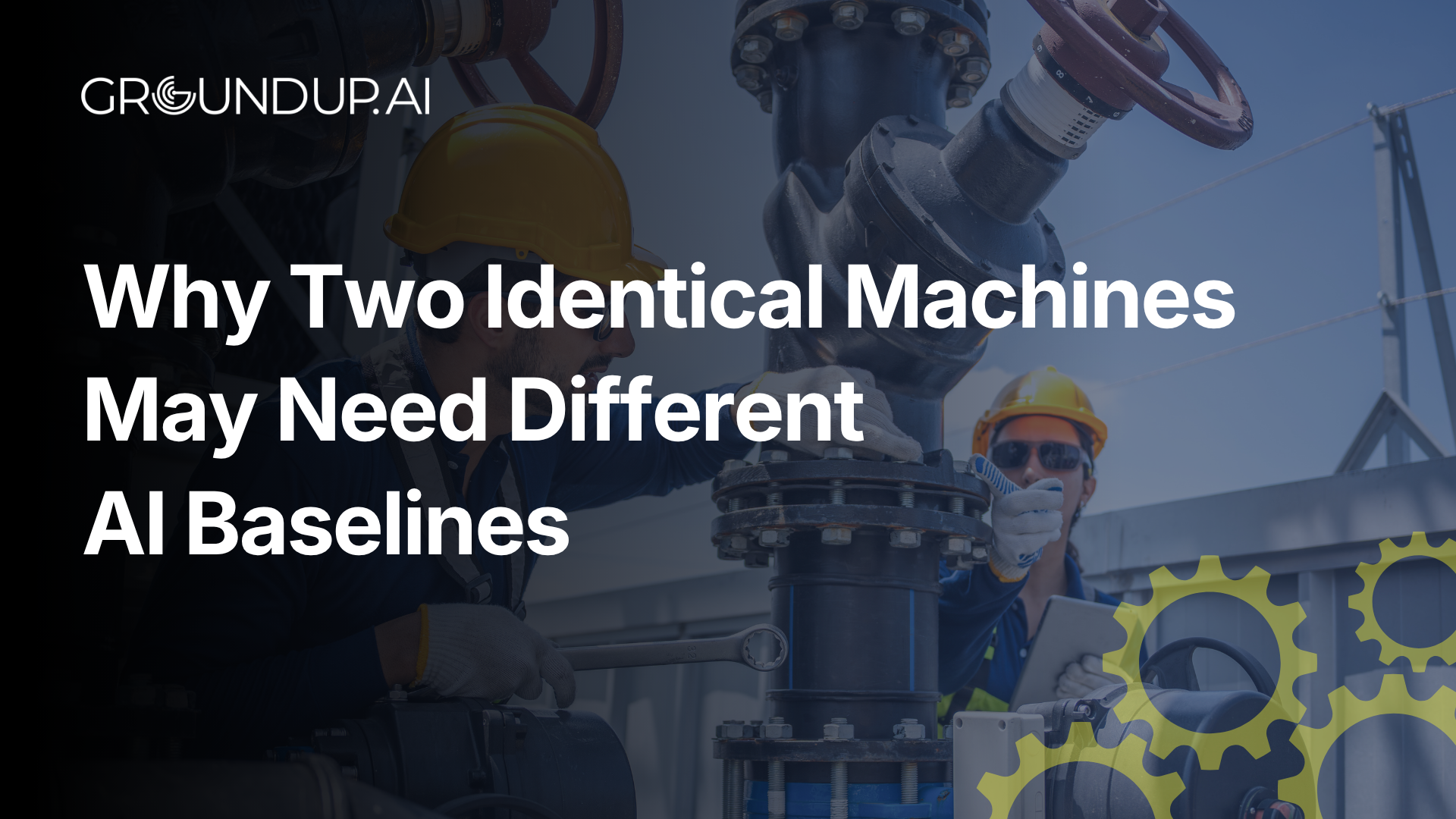
Two identical distribution pumps, same make and duty, do not share a vibration or current signature once foundation, alignment, and duty cycle diverge. Software built on generic thresholds will nuisance-trip on one pump and stay silent on another while a real defect grows underneath the limit. Ask whether the system builds a per-asset baseline for each machine, or applies one number across assets that are not actually identical.
3. Detection is not diagnosis
An alert that says vibration is high is not an answer. It does not tell you a bearing is spalling at its defect frequency, that a seal is weeping, or that a pump is cavitating. Strong predictive analytics isolates the failure mode and the likely root cause, so your team knows what they are walking up to. This is the difference between software that predicts and software that reasons.
4. It has to cover the assets that actually carry the network
A water utility is, at its core, a vast fleet of rotating equipment. Raw-water and booster pumps, aeration blowers, lift-station pumps, and the motors driving all of them. That rotating fleet is where most unplanned failures and most of your pumping energy live, and pumping alone can be the largest share of the up-to-40-percent of operating budget that energy consumes. Make sure the tool is built to read that equipment deeply, not just log tank levels and flows.
5. It must integrate, not replace
You have already invested in SCADA, GIS, sensors, and a CMMS. Good AI predictive maintenance software layers on top of that stack and pushes its recommendations into the work-order system your crews already use. A tool that demands a rip-and-replace, or that lives in its own separate dashboard nobody opens, will not survive contact with a busy operations team.
6. Remaining useful life (RUL) turns emergencies into planned work
The point of predictive analytics is not to know sooner that something is broken. It is to know early enough to plan. Ask whether the software estimates remaining useful life against the P-F interval, the window between a detectable warning and functional failure, so a repair becomes a scheduled job with the right parts and crew, not a midnight callout. That single shift is where the asset performance management business case is won.
7. Operational fit decides whether anyone trusts it
The best model in the world is worthless if the operator on shift ignores it. Judge a tool on how few, and how trustworthy, its alerts are, not how many. Does it hand the crew a specific recommended action? Does it rank where attention is needed across every station so scarce people and CAPEX go to the right asset? Trust is earned the first time the system catches something the spreadsheet missed, and lost the first time it cries wolf. That is exactly the trust gap Cognitive Maintenance is built to close, by carrying every reading all the way to an action a human can stand behind.
The Through-Line
Notice that six of these seven are really one idea. Prediction is not the finish line. Acting on it in time is. Legacy tools stop at the alert. The software worth buying reasons, diagnoses, and guides, so your team spends its hours fixing the right asset at the right moment instead of triaging a wall of warnings. That is the layer our Groundbreakers work at, on site with operators, turning signals into decisions the team can trust. 💧
The next wave of infrastructure maintenance is not coming. It is already here.
P.S. If your current system generates more alerts than actions, that is not a you problem. It is a design problem, and it is fixable.